Podcast: Going for Gold! Smart Strategies for Winter Sport Success
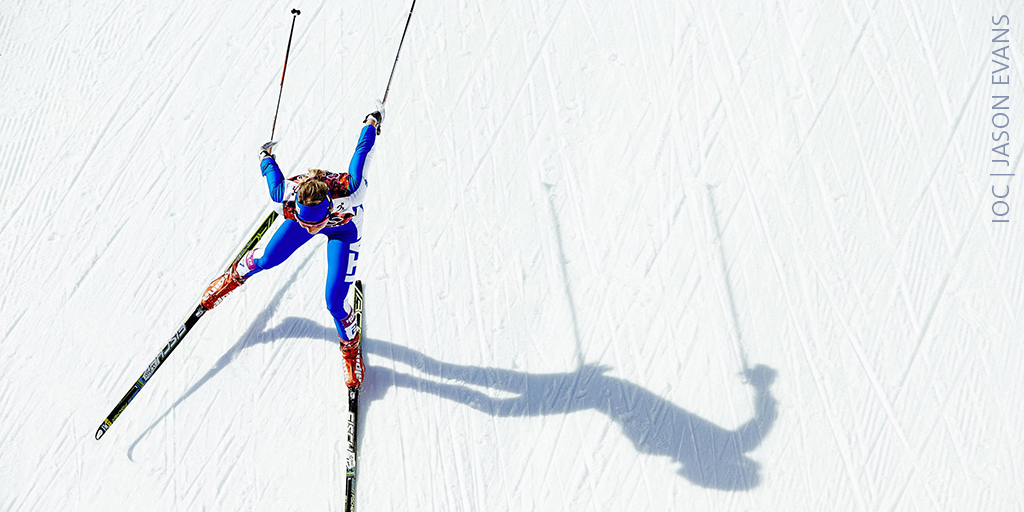
Do the Winter Olympics inspire you try a new winter sport - or aim higher in one you already pursue? Learn how to adapt the mental and physical strategies of high-performance athletes to reach your personal best. Listen in with sports medicine specialist Dr. Jeffrey James and Human Performance Coordinator Brett Hoffman on this Premier Health Now On-Air podcast.
Listen to Going for Gold! Smart Strategies for Winter Sport Success - Premier Health Now On Air, Episode 23 or read the transcript.
Going for Gold! Smart Strategies for Winter Sport Success - Premier Health Now On Air, Episode 23 - April 8, 2018
Leslie Lane: Welcome to Premier Health Now On Air. Here's where you'll meet local healthcare professionals who have timely helpful tips for taking good care of yourself and the people you care about. I'm your moderator, Leslie Lane. And with me today is Dr. Jeffrey James, a sports medicine specialist with Premier Orthopedics. We're glad you're with us.
Jeffrey James: Glad to be here.
Leslie Lane: And Brett Hoffman, sports and human performance coordinator at Premier Health. Thanks for joining us.
Brett Hoffman: Thank you for asking me.
Leslie Lane: And welcome to you, for a special Olympics episode. February is a short month that's long on excitement every four years. The Winter Olympics return this month to South Korea for the first time in 30 years, with everything from alpine skiing and biathlon to snowboarding and speed skating. There's nothing like watching these athletes giving it all they've got to inspire you to grab your gear and head out into the cold. But Brett, is that really a good idea?
Brett Hoffman: Well, it can be. It's really nice to be inspired by others. And it's really nice to see things and go for goals but we have to be careful because sometimes we tend to bite off more than we can chew and we want to avoid getting hurt. We want to have fun. We want to get better. But we really, really want to avoid that injury.
Leslie Lane: So, Dr. James, what's a smart plan for getting started in winter sports like skiing or skating or half-pipe?
Jeffrey James: Well, the first thing you need to do is make sure you look into actually what you're doing and understand exactly what that sport involves because there's everything in winter sports from skiing, snowboarding, you know. It could be ice skating, figure skating, to ice hockey. And each of these sports really encompasses different things, different mechanics, different equipment. So you've really got to understand first what's involved with each sport.
Leslie Lane: So, Brett?
Brett Hoffman: I would say the other thing to add with that is that it's really important to get some quality instruction. I really think that ... I work with a lot of golfers and one of the most frustrating things is you get a new set of golf clubs but you don't know how to use it. Odds are, you're not going to hurt yourself. But with skates, with skis, there's a good chance you're going to get hurt. So taking the time to get some quality instruction, I think is really one of the most crucial things to get going.
Leslie Lane: What about conditioning?
Brett Hoffman: Conditioning is a problem. If you're going to be ... If you're going to use the event, like say skiing, to get in shape, well then the odds are you're never going to get to the type of the level that you want to be at. Just look at the last Super Bowl commercial, for example, where you had some of the Olympic athletes like Lindsay Vonn out there, just tearing it up in the weight room. They spend as much time if not more in the weight room and in training the bodies than they do on the slopes. So it's really important to understand, we don't just condition ourselves while we're practicing. Key component there, but we also have to do those other things to make our core strong and make us less susceptible to injury off the slopes.
Leslie Lane: So since you mentioned Lindsay Vonn, I saw in the New York Times that they were featuring her workout. So Dr. James, should I go do Lindsay's workout?
Jeffrey James: No, I think really ... just as we talked about understanding each sport effectively, we need to understand what our starting point it. Not everybody's going to be able to jump right in and do the type of workout that Olympic athlete can do. We need to take things slowly. Just like we need to get instruction in learning about these sports, we need to get instruction in the type of workouts we're doing. If not, you can really be setting yourself up for an injury by going too fast in not only the type of sport you're doing, but also in the workouts to prepare for the sport.
Leslie Lane: So Olympic competitors this year range from age 15, this is a half-pipe skier from China, to a Japanese man who, at 45, is one of the oldest and competing in a record eighth Winter Olympics. Brett, how do we adjust for age when we're shooting for, if not Olympics, our own peak performance?
Brett Hoffman: Everybody is a little bit different. And so when we start looking at the different sports- because I'm sure that they're not competing in the exact same sport that's going on- sometimes that experience gives you a little bit of an extra edge. The big problem is that when we try to push ourselves when we're too young or "when we're too old", which is a phrase- being over 50 myself- I don't personally believe in. But we do have to understand our limitations and we do have to make sure that we understand that at certain ages we're more susceptible to certain types of injuries and we always have to take that into account when we're putting that training format together.
Leslie Lane: So, Dr. James, what kinds of injuries do we need to be mindful of with winter sports?
Jeffrey James: Winter sports encompass a ton of different injuries and they vary by the type of sport. It can be as simple as if you're going skiing, snowboarding, something outdoors, one, you need to be prepared for the weather. You can get things like just simple frostbite and things like that, but the other things you need to be aware of is ... if you're doing a downhill sport like skiing, snowboarding or even really ice skating, it's important to have protective gear like a helmet because it's really easy to fall and hit your head and end up with a concussion or worse. Skiing puts you at risk of knee injuries like tears to your ACL or your MCL along with bumps and bruises from falls and things like that.
Those ... you could go on and on with each different sport type but those are just a few that come to mind.
Leslie Lane: So, Brett, how can we prevent or avoid the injuries that can sideline us potentially?
Brett Hoffman: You know, it's really difficult to say "prevent" because we have, for example, Lindsay Vonn. She's coming back from ACL surgery. We also have Lauren Ross, another downhill skier. She's coming back from ACL surgery. And Jackie Wiles is another example of a downhill skier who just fractured her leg a couple days ago. So prevention is really difficult, but understanding that the risk is there. And then doing simple things.
Like for example, there was a study that came out of Vermont that shows that about 20,000 skiers a year suffer ACL injuries. Some of the things of just learning how to land properly. And that's where that instruction comes into play. How to basically control yourself on the slope. And then on top of that, making sure that you're strong enough to do what needs to be done. And the one thing that everyone forgets about: being properly conditioned in recovery. Most of these injuries occur when we're tired and if we're going for that last run on the slopes, odds are, you're probably going to have a greater chance of a serious injury.
Jeffrey James: Yeah, Brett, I completely agree with that and the other thing I would add is that, I think it's important as we talk about getting into sports and getting into skiing and things like that, people like to watch the Olympics and they like to go for gold, so to speak. But sometimes you need to properly acclimatize to those slopes. Start with the smaller hills and work your way up to the bigger ones and don't go for the ... if you haven't skied in a while or haven't skied ever, it's not a good idea to go right up to the black diamond or double black diamond slope. You're just setting yourself up for falls and injuries.
Leslie Lane: Is there a difference between- you mentioned lessons and a trainer that could help you condition ... am I thinking about that right? Is there really a difference? And if I want a trainer, what do I look for in a trainer?
Brett Hoffman: I think you have it right. When we're talking about lessons, I feel that we're talking about what's happening at the venue, be it on the slope, be it on the golf course, be it on the soccer field. But when we're talking more of the trainer, we're talking about what's going on in the weight room. We're talking about the conditioning, the things that go on to prepare you for that. As a sports and conditioning specialist myself, I do not know how to tell you, for example, how to properly get in the tuck position to ski. But if their personal coach tells them that that is an issue, I can certainly help them get into that, which will translate onto their performance on the slopes.
Leslie Lane: You talked earlier about that going for the gold, really pushing hard. There is that 'tough it out' mindset that leads to playing through pain or injury. Dr. James, what's your advice on that?
Jeffrey James: I think there's a varied opinion on this, but there's a difference in playing through pain versus discomfort versus muscle soreness versus things like that. And you have to be able to tell the difference as the athlete and coach and things like that. It's not always a good idea to just play through pain or continue to participate through pain. You could be setting yourself up for further injury by doing that. If it's more of just, yes, my muscles are a little bit sore, or I have soreness because I fell on the slopes and I'm a little bit bruised, that's quite different story than saying, "When I'm going down the slopes I can hardly put pressure on this leg," or ... that's not a good idea to push through. You're just setting yourself up for further injury.
Leslie Lane: During the Games, we see athletes using sports psychology techniques. Visualization, I think, is a big one. Brett, can you share any useful strategies for non-Olympians?
Brett Hoffman: Well, I think that visualization is a really important thing that we focus on every day in our everyday life. And I'll put it to you this way: if you wake up in the morning and decide you're going to have a bad day, odds are, you're going to have a pretty bad day. So basically getting yourself in the mindset is really all we're talking about. I've had a couple of experiences, for example, once when I was in Chicago I got to sit down with Tim Grover. Now, he was Michael Jordan's personal trainer. And one of the things that he would say about Michael Jordan is that his ability to visualize and his ability to put himself in a mindset that allowed him for success was unprecedented. He said basically this, is that every time he'd made that last second shot, well, he'd done it a thousand times in his brain and so he was ready. It wasn't a new experience for him.
So I think for all of us, taking the idea and saying, "How can I see myself being successful on a day? How can I see myself basically getting the most out of anything that it is that I want to do?"
And with that, I will throw in one other thing. There was an admiral, his name was McRaven. In 2014, he gave a commencement speech. And what he basically talked about is this, is that, if you start off your day by making your bed, then what you've done is, you've already succeeded well at a task and you're able to continue to build on that during the day. So what we're really trying to accomplish is not just one isolated goal but we're trying to see that we have a better overall experience and that we're able to continually grow. Not only as athletes, but as any type of professional or any type of person.
Leslie Lane: Great advice for a mindset. Are there any specifics about how you can apply this really great "go forward" mindset into doing visualization? Are there specific practical steps you can take?
Brett Hoffman: Well, the very first thing that I would say- and I've read a lot of successful people, be them athletes or be them Wall Street investors- and almost everyone to a person devises a routine. They almost all live off some routine where they can tell you that basically this is what their day is going to look like because they want to be disciplined in how they approach things. From there, I think mindfulness. Setting time aside, basically for me, for example, and then again sometime mid-afternoon, where I can basically refocus myself. And all I'm doing ... you can use the word meditation, but all that I'm doing is basically trying to clear myself of the various fog that's going on around me, and just clear it so that I can take on the day. So a lot of people get turned off by meditation. They're afraid of it. But the idea is just to let your mind get quiet. And by doing that you can find that the one greatest thing that all athletes do, better than pretty much anyone else, and that is they exist in the moment in which they're competing. And if you can learn to exist in the moment like them, then your successes, be it in any venture, are unparalleled or uncapped.
Leslie Lane: Fabulous. Just be in the moment. Great focus. So in this moment, Dr. James, I want to ask you as part of that routine, how important is eating to fuel performance?
Jeffrey James: Nutrition is absolutely a huge part of trying to enhance your performance. So it not only supports your physical well-being but it also helps with your brain health as well. And as we previously mentioned with trying to maintain routines, mindfulness, and keep your mind at the task at hand, you can ... If you're not eating healthy, your body's not going to feel as good as it should, so your brain and your mind is not going to be where it's supposed to be.
Leslie Lane: Before we wrap up, I'd like to ask what events you will be watching? Are you following a particular athlete? Gentlemen?
Jeffrey James: I follow a lot of the events. I find the Olympics fascinating from the training that they go into, to just the side stories that are going on. So I think it'll be particularly interesting to follow hockey. I always like to follow it but for this particular Olympics, there's no NHL players that are going to be in the Olympics at all, so it's going to be mostly minor league hockey players or even college athletes. So it will be a little bit different than it usually is.
I also like to follow a lot of the downhill skiing, which I think is good. One of the interesting stories, I think, is the U.S. has a part ... she's an American citizen but she was also ... her parents are Korean so she's actually kind of, in a sense, going back home and she's 17 year old and it's going to be her first Olympics so it's kind of an interesting side story and she's recently did very well at the X Games and is expected to do very well at the Olympics too.
Brett Hoffman: I, too, am really looking forward to hockey. My first real Olympic experience that I remember is 1980, Lake Placid. Miracle on ice. So for me, the hockey is the single most important thing. And I have to throw out that I'm really, really interested in seeing how the women do. It's because I really am looking forward for another Canada-America ... United States gold medal game because I think that'll be exciting. From there, let's see how Lindsay Vonn does. And anything else that involves a lot of speed, I think is really fascinating to watch because it's something ... This is different than any other sport when it comes to just the amount of speed that's involved in the Winter Olympics.
Leslie Lane: Well, three out of four Americans are expected to be watching these Games. So we hope today's program enhances your experience during the Games and after. I want to thank our guests today, Dr. Jeffrey James, a sports medicine specialist with Premier Orthopedics and Brett Hoffman, sports and human performance coordinator at Premier Health. If you want to know more, visit premierhealth.com/healthnow. We'll be back. We hope you will. I'm Leslie Lane. Thanks for joining us, and watch for our next edition of Premier Health Now On Air.
Jeffrey James, DO, Premier Orthopedics; Brett Hoffman, Premier Health Sports and Human Performance Coordinator