Podcast: Advances in Diabetes Care Make a Life-Changing Difference
Everyone knows someone with diabetes. But what you don't know about the disease can have lifelong impact, especially if you are one of the millions of Americans on the path to developing the disorder. Living well with diabetes today is a whole new game, thanks to greater understanding of the disease itself and new diagnostic and treatment tools. Tune in to this Premier Health Now On-Air podcast to hear Dr. Miguel Parilo of Bull Family Diabetes Center talk about the very real risks of this silent killer and how you can take advantage of the latest advances.
Listen to Advances in Diabetes Care Make a Life-Changing Difference - Premier Health Now On Air, Episode 1 or read the transcript.
Advances in Diabetes Care Make a Life-Changing Difference - Premier Health Now On Air, Episode 1 - November 21, 2019
Leslie Laine: Welcome to Premier Health Now On Air. Today we're talking about diabetes. Chances are good you know someone with this condition. Maybe it's you. The thing is what we know about diabetes keeps evolving and that knowledge can affect what we can do about it. So let's find out the current thinking and how that may be changing outcomes. I'm your moderator, Leslie Laine. With me today is Dr. Miguel Parilo with Bull Family Diabetes Center. He's a board certified internist with a specialty in diabetes, and he has long experience in helping patients of all ages live well with this condition. Dr. Parilo, thank you for taking time to be with us today.
Miguel Parilo: It really is my pleasure to be here. Thank you for inviting me.
Leslie Laine: The Centers for Disease Control estimated in 2017 that nearly 1 in 10 Americans has type two diabetes, diagnosed or not. But that report also suggested that more than twice as many have prediabetes, and untreated, that could lead to full blown disease in just a few years. So over the course of your practice, what are you seeing with the trend in diabetes? Is it on the rise?
Miguel Parilo: It's absolutely on the rise, and unfortunately, it's not just specific to our region, our state, our country. It's a global phenomenon and really seems to follow trends related to our lifestyle, trends related to our weight, and how we manage our day to day living. So as the rates of obesity change and evolve and increase, the rates of prediabetes increases, and without any intervention or change of course, those people unfortunately spill over into true diabetes.
Leslie Laine: Just briefly, what do you mean when you say prediabetes?
Miguel Parilo: There are degrees of abnormality of blood sugar elevation, and that's the variable that we measure. We can see disease by checking a blood sugar. And that can reflect the underlying problem related to the body's ability to use insulin, for example, the hormone that controls blood sugar levels. In people with prediabetes, they still make plenty of insulin. In fact, they probably make more than someone who has normal levels of blood sugar, but their blood sugar levels are high, but not high enough, to be labeled a diabetic. So they have some degree of blood sugar elevation, just not high enough to be categorized as an individual with diabetes.
Leslie Laine: Around the country, there are pockets of higher rates of diabetes. How do we fare in Ohio, in our region?
Miguel Parilo: So the rates of diabetes reflect a variety of different variables. In part, it's related to ethnicity. So states that have a higher minority population, states that have higher average aged population also seem to carry a greater burden of type two diabetes. So unfortunately, Ohio having an older, ethnically diverse population carries a very high rate of type two diabetes. So we're certainly in the top 10 in the nation. When we drill down specifically to Montgomery County, within the state of Ohio, we're about 13% of our local population has diabetes, whereas the national rate's around one in nine and a half, almost one in 10. Montgomery county's doing a good job at developing diabetic individuals.
Leslie Laine: Can you briefly orient us to the different types of diabetes, just so we're clear for the rest of our discussion?
Miguel Parilo: Sure. There are many forms of diabetes, but we generally only talk about two or three because the remainder are quite rare and unusual. By far the most common type is type two diabetes. In the old days it would have been referred to as adult onset diabetes. We don't use that term any longer because age is almost irrelevant. Although it does increase in incidence as we grow older, its associations with other conditions like obesity can occur in the young population. So that would make up at least 95% of the diabetic population is type two diabetes, so that's a condition associated with the body's unwillingness to listen to the signal of insulin, something called insulin resistance, and then later the development of some deficiency of the production of insulin and the utilization of insulin.
Miguel Parilo: The second type would be type one diabetes, very different disease than type two diabetes. That's generally thought to be an autoimmune disorder, a disorder where the body is developing a protein, something that shouldn't be there, that's preventing your own body's ability to make insulin from the pancreas. And these individuals, since they don't make insulin, really truly are dependent upon the use of insulin injections or receiving insulin from outside the body to stay alive. Because without insulin you can't use carbohydrates for energy. And these people are literally starving for energy, their cells are. And then thirdly would be gestational diabetes, or diabetes of pregnancy. Again, associated with a variety of other conditions, but specifically women who are pregnant and going to have children.
Leslie Laine: So for the purposes of our discussion today, perhaps we can focus on the one that is most common, the type two.
Miguel Parilo: Definitely. I would, just playing the odds, the majority of our listeners have a family member with diabetes, and those individuals are probably type two.
Leslie Laine: Many people do live well with diabetes, so it's tempting to think it's not such a big deal. Why should we take it seriously?
Miguel Parilo: Well, controlled diabetes takes a lot of work, but you can certainly live a wonderful, long, normal life with diabetes. And the tools and tricks of today are far better than just a few years ago. What we know about diabetes today is so different, and therefore the current outlook is much more optimistic, but the reality remains. Uncontrolled diabetes remains the leading cause of blindness in the developed world, including the United States. It remains the leading cause of kidney failure leading to dialysis in the United States, and it remains the leading cause of nontraumatic limb loss or limb amputations in the United States. So it's a very serious disease, but generally controllable, and with some attention and consistent work and persistency at taking care of oneself, we expect the long wonderful life.
Leslie Laine: So you've worked in the field of diabetes for nearly 20 years, correct?
Miguel Parilo: Yes. Post-Training. Yeah, about almost 20 years.
Leslie Laine: Well, I'd like to talk about how your approach to diabetes has changed over that time with new information and new technology. I mean, starting with diagnosis.
Miguel Parilo: Sure. It is interesting that even the way we diagnose diabetes has changed in two decades. So we now have a blood test called a hemoglobin A1C. That was a test that really became standard and common in the mid to late 90s. Prior to that, we didn't have ready access to such a thing, and now I can do this blood test in my office with a finger stick and give your results in approximately three minutes. So this test allows us to make a diagnosis of diabetes and assess the degree of your diabetes by looking at an average blood sugar over two to three month period. So that has vastly improved our ability to diagnose and manage the disease. In the old days, we relied primarily upon fasting and non fasting blood sugars, so a measurement of blood sugar levels after a period of time of not eating. Sometimes we would do a test called a glucose tolerance test. Very inconvenient, uncomfortable, time consuming, costly, that I rarely, rarely find a reason to consider doing any longer. It's more of a historical story than a test that we perform on a regular basis anymore.
Leslie Laine: If it's true that there is this whole cohort of people with prediabetes, I'm guessing they don't know they have it. I mean, what do you want to say to them? These people who, "I feel fine, nothing wrong with me."
Miguel Parilo: So there are a group of diseases that we refer to as silent killers, and the truth of the matter is diabetes is one of them. If there are more than 30 million individuals with diabetes in the United States, almost a quarter of them haven't been diagnosed because the symptoms of diabetes are generally related to extremes of blood sugar, very, very high or very, very low. And a pre-diabetic population, a population of people who have abnormal levels of sugar to a modest degree won't have symptoms of the blood sugar changes. Even individuals with true diabetes won't necessarily feel that. And that isn't often what brings them to the doctor for a test or an evaluation.
Miguel Parilo: Sometimes it's the symptoms of the complications. They go to see their doctor because their feet are burning and they're diagnosed with diabetic nerve damage from having had diabetes undiagnosed for years leading up to that diagnosis. So there are a variety of risk factors that we can talk about that would hopefully encourage people to see their doctors, see their practitioner, to get testing, to have screening. So age, there is still an association of advancing age with the development of type two diabetes. So if you're over age 45, that by itself is a reason to go have a screening test for diabetes. If there's a family history of diabetes, then that is too a reason to go. And so if you have a family history and you're under age 45 then your screening probably should start even before that. Let's say you have a sibling or a parent with diabetes, and you're age 35 or 40, I would start the screening earlier because you have another risk factor.
Miguel Parilo: Any ethnic population, any non-Caucasian population, Hispanic, African American, Pacific Islander, Asian, these are all ethnicities that are associated with the development of type two diabetes. If you have abnormal blood cholesterol levels or history of elevated blood pressure, or women who have had large babies, diabetes of pregnancy. Large babies I should define as over nine pounds. So having a big baby in your history puts you at greater risk for the development of type two diabetes later on. Something else specific to women would be a history of polycystic ovarian disease. So these are a handful or a couple of handfuls of conditions that would instigate the need for screening at a time sooner rather than later. Since I can't necessarily cure diabetes, but we can prevent diabetes by intervening in a pre diabetic population, that's really where our efforts should lie because of the potential devastation of the diagnosis if left untreated and uncontrolled.
Leslie Laine: And I'm going to guess that prevention has to do with the same approaches that you're going to take for treatment?
Miguel Parilo: We can only intervene in certain factors. I can't change my family history, I can't change my ethnicity and these other factors. However, I have potentially tremendous influence on my weight. I have potentially tremendous influence on how active I am, the foods I put into my body. So these are by far the most potent and effective means at preventing one from developing type two diabetes. There's been a lot of research looking at specifically that question is how do we prevent diabetes? And in every instance, a medication was put up against healthy living.
Miguel Parilo: And in one study in particular, the world's largest study in the prevention of diabetes, the Diabetes Prevention Program, individuals were encouraged to do five days a week, approximately 20 minutes of exercise, eat a high fiber, low fat diet. They received education on healthy lifestyle living. They had a significant reduction in the development of diabetes in a pre-diabetic population. Compare that to the use of drugs, the drugs were not nearly as effective. So if I have prediabetes, or if I'm talking to friends and family with prediabetes, if you're willing and able to do those healthy lifestyle things, do that. If you're unsuccessful or unable for some reason, that's a reason to consider medication, but medications would be a fallback.
Leslie Laine: Have there been advances in medications over the course of your practice that leads you to be encouraged about their use for people who can't make progress with lifestyle management?
Miguel Parilo: Yes, so we have more options now for diabetes prevention medications. There are more medications used for obesity. There are oral medicines and injectable medicines that we can prescribe for the treatment of obesity. There are a variety of other medications, not necessarily specific for blood sugar lowering that are associated with the reduction of risk of developing type two diabetes over time. So that looks encouraging, but again, nothing that looks so promising that I would do that instead of healthy lifestyle.
Miguel Parilo: With the explosion of obesity, weight loss surgery or metabolic surgery, what we used to call and sometimes still call bariatric surgery is gaining favor. That is something that can, in some instances, completely change your biology, your chemistry. So some of these procedures in an at-risk population can induce significant weight loss and that weight loss by itself lessens the body's resistance to insulin, and therefore can change the path towards the development of diabetes. Some forms of metabolic surgery change your chemistry, so it's even before you've lost weight, blood sugar abnormalities can turn the corner abruptly.
Leslie Laine: I've heard people able to be off diabetes medication after bariatric surgery.
Miguel Parilo: Yeah. So if we specifically look at a diabetic population and they undergo a bariatric procedure of one sort or another, the numbers are potentially very high for the remission of diabetes, of type two diabetes. So they're all different types of procedures, of course. And it depends on the person. If a person has very advanced diabetes, they're using a lot of insulin to control their blood sugar levels, their remission rate may not be as high. However, their control of diabetes will be somewhat streamlined and easier. Their life with diabetes is generally improved and their lifestyle with diabetes is improved. And probably even more important is their life expectancy has improved. The rate of death is better. They live longer and better, even if I can't put their diabetes into remission. But if you step back and look at the diabetic population in total with metabolic surgery, bariatric surgeries, the rates of remission can be 80% or higher. So that's far better than any medicine I can prescribe. So we're lucky enough in this community to have a metabolic surgery center and their outcomes at least match the national data. So it's very exciting
Leslie Laine: And we should mention that bariatric surgery is indicated for morbidly obese patients. You have to be certain criteria, so not to get into BMI and a lot of discussion, but we should just say that it is not for everyone, but is an option for people that had not been there before.
Miguel Parilo: I do think it's important to at least explain BMI because if one of the major modifiable risk factors is obesity, we need to understand, "Am I as an individual obese? How can I intervene if I don't even understand what that means?" And the term obesity to a clinician doesn't have a pejorative connotation. It's not an insult, it's a clinical term. But I know in the community being called obese sometimes has a very negative connotation. So the body mass index is different from just the weight of 200 pounds, 300 pounds. Because if I'm 200 pounds and I'm six and a half feet tall, it has a far different meaning than if I'm five and a half feet tall. So the body mass index factors in your weight per height.
Miguel Parilo: So normal would be a body mass index under 25, over that is overweight, over 30 is obese. The indications for bariatric surgery or metabolic surgery in someone with diabetes would be a body mass index of 35 or higher, I would consider it. So if I have type two diabetes, my body mass index is over 35, it's potentially an option. If I have extreme obesity, if my body mass index is over 45, I probably should consider it very seriously because the ability to treat my diabetes and live a long, healthy, productive life is much more difficult at that extreme level of obesity.
Leslie Laine: While we're on the subject of treatment, the advances in monitoring seen to have been significant in helping people do the right thing at the right time, I guess is how I would say it. So tell us a little bit about what's different in monitoring today.
Miguel Parilo: Monitoring blood sugar is, to me, it's the GPS of the whole system here. So if I have mild forms of diabetes, I'm not using drugs prone to the development of low blood sugar. If I'm in good control and I'm not manipulating medicines with that information, then yes, I think we can get by with less blood sugar monitoring data. Obviously in my practice I see individuals who are originally very out of control and my job is to work with them to get them into control. I have no idea how to do that without blood sugar information. It tells me the whole landscape, what's working, what's not, what's broken, and therefore the solution, what is the fix to their break.
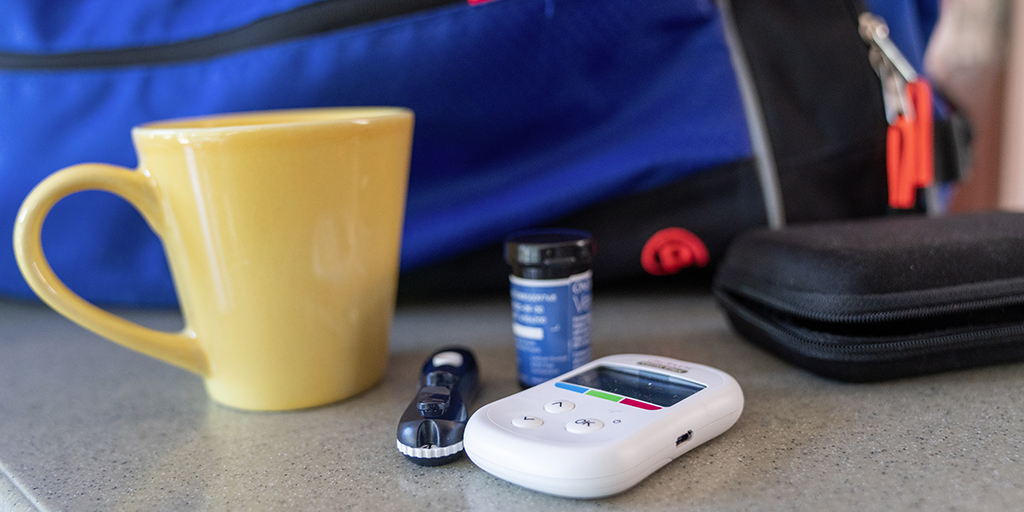
Miguel Parilo: So we have a variety of blood sugar meters on the market. You need blood to check blood sugar and most individuals are still poking a finger or some part of their body to get a spot of blood to measure blood sugar at that moment. The tests use smaller samples, they're less invasive, they're more convenient. They can communicate with smartphones, they can communicate with cloud-based depositories of data and track and recommend and do all kinds of bells and whistles. That's important because many of my patients when they were diagnosed, it didn't have blood glucose meters, so that was a tremendous advancement in diabetes technology.
Miguel Parilo: Probably around 15 years ago, glucose sensors came onto the markets. Glucose sensors work by different ways to estimate basically what the blood sugar is and they can do that on a frequent basis, say at intervals of five minutes, so you can really trend and see is the blood sugar climbing? Is the blood sugar falling? You can set parameters of a high end or a low end specific to what my needs are so that if I'm asleep and my blood sugar happens to hit a low level, I don't have to necessarily wait for a horrible symptom. I can count on my device to alert me of, "Hey, there's a problem." And bells and whistles will go off. Friends and family can even be notified with these devices. They can send out a signal to have a text message sent to a spouse, for example, or a parent of a child, so someone can assist you and identify low blood sugar episode before it's dangerous.
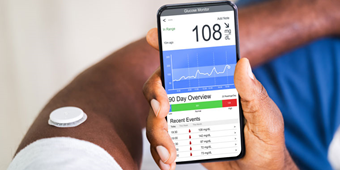
Miguel Parilo: Now these have gone forward multiple generations and they're at essentially consumer level. You're seeing them on the evening news during the commercial breaks being advertised direct to consumers, these so called flash glucose sensors. These are devices that can be worn generally in the back of the arm. They'll assess blood sugar levels at short intervals. Whenever you want to know what your blood sugar level is, you could put a receiver device, whether it be a smartphone or a standalone receiver and have instant access of what your blood sugar level is.
Miguel Parilo: So to check your blood sugar by a traditional method, poking your finger, it's kind of hard. It can be socially awkward, it can be uncomfortable, it can be expensive. People worry about hygiene. "Do I go to a restaurant bathroom and do this?" They might be awkward at a party and not want to do that, even though it's probably the best thing to do is to know my blood sugar. These sorts of devices streamline that, reduce barriers and facilitate the monitoring of blood sugar. So if I want someone on insulin, for example, to check their blood sugar four times a day, it's a big chore. If I can put them on a glucose sensor, they're checking 8, 10, 12, 30 times a day. It's impressive, and that really clarifies the picture of what is happening, encourages the patient to make better decisions, see the pros and cons of what they are doing and give me better data to help make better recommendations.
Leslie Laine: I'm guessing that advances in monitoring our result of research over time. What now is looking promising to you in other areas of diabetes research?
Miguel Parilo: The landscape of diabetes research is vast. Diabetes is a very expensive disease. It consumes a large budget, large portion of the Medicare budget, and tremendous funding is going towards diabetes treatment, diabetes prevention, and not just type two diabetes. But let me say a couple of things about type one diabetes. I know we haven't talked a whole lot about type one diabetes, but to me personally and in my practice, there's a tremendous focus obviously on type one diabetes. So soon, perhaps yet this year, the first pill for type one diabetes will be available with an FDA indication. We've played with non-insulin therapies, so-called off label without the support of FDA, with some degree of clinical evidence to show safety and effectiveness. But it looks as though we may now have an actual pill, not to replace insulin, but to supplement all that an individual with type one diabetes is doing to control his or her diabetes. So to me that's a tremendous step and something I wasn't sure I would ever see in my career. So that's very, very exciting.
Miguel Parilo: Specifically to take two diabetes, the class of medications that are coming to treat blood sugar levels is exploding. In the last five years there have been more new medicines on the market than probably the last 15 I would estimate. So the number of tools in my toolbox just continues to grow. And with each generation of new medications, the side effects or the risks as far as developing severe low blood sugar, those things get better and better. The complexity of using the medicines seems to improve and the ability to understand how to target the different abnormalities that led to the development of diabetes gets clearer. So it allows us to find new tools, appropriately apply them sort of like a smart bomb. I don't have to go and hit the whole town. I can just hit the one area I need to hit and cause less collateral damage. So that's very exciting.
Miguel Parilo: Specifically to prevention. The more we understand the reason why we developed type two diabetes, the better we can apply our preventative policies. So you're seeing in some communities, legislators advocating reduction of sugary beverages, or schools taking measures to limit access to vending machines and promoting reduction of screen time. I think as we understand the reasons for the development of type two diabetes, we will see better and more effective national policies. I can treat many people with diabetes. I can't treat them all. And with this tsunami of individuals with prediabetes coming behind them, my concern is the outlook for the future. So there are statistics that the CDC has that as soon as 2030 we have half of individuals with diabetes. There aren't enough humans on earth to control that burden of disease. So my thought is research and prevention is paramount. We can treat now, but we're still suffering it prevention.
Leslie Laine: So why should someone, and it sounds like there'll be a lot of someones, who gets a diagnosis of diabetes today be optimistic?
Miguel Parilo: Well, there is plenty of reason optimism. Because of the number of tools that I have, because of the knowledge and understanding of nutrition and the importance of changing to healthy lifestyle behavior, that as a team we can come up with an approach that is potent but safe and effective. We understand still that diabetes is a disease that progresses, but knowing that and understanding that, having the ability to monitor that and intervene at multiple levels can allow us to gain control and maintain control over time. And that's what we're trying to do. If we can lower that average daily blood sugar, if we can maintain that A1C test at a safe level, then the risk of developing those concerning complications is dramatically reduced and therefore the lifestyle and the life expectancy of someone with diabetes is still quite optimistic.
Leslie Laine: It sounds like you have a lot of tools to use, but what tools do you have for patients?
Miguel Parilo: That's an excellent question. As a clinician, as a physician, I focus as most of us do, on medications. And they're very effective and they work, but they come at a price and they come with potential for side effects and sometimes we overlook very foundational, critical steps at the treatment of chronic disease like type two diabetes. The more I understand about this lifelong disease, the more I'm in control of it, the more power I have over it, the more successful I will be. It's concerning to me that in general, a patient who is new to me, someone who has had diabetes for quite some time, decades in many instances, never met with a diabetes educator before, never met with a dietician and learned the basics of, "What is a carbohydrate? How many should I consume? What are my calorie goals? How much exercise should I get? How do I monitor for complications of my disease?" Et Cetera, et cetera. There's a plethora of important points that I need to understand to be the master of my disorder.
Miguel Parilo: So if someone has gone to a diabetes educator, it's generally been far too long ago, and over that same period of time, the medications they're on have changed. 10 years ago, the medicines you were on didn't exist, and so a refresher of that education is critical. It's a changing disease, it's a changing body of science. The recommendations change and therefore we have to update our knowledge. It's been proven that if you participate with diabetes education you can reduce that A1C blood test, that measure of your control, by one full point, which is very significant. One full point equals about a 40% reduction of your risk of some complications of diabetes. So 1% sounds like a small number, but at the end of the day it is a very powerful reduction of A1C and I'm not sure I've ever met someone who suffered a side effect of education.
Miguel Parilo: They're not going to have low blood sugar, they're not going to develop stomach aches and these sorts of things that some of the medicines I prescribe can cause. So it's safe, it's effective. And furthermore, we're somewhat lucky here in our area. Diabetes education is covered by many insurance companies. However, it's not covered by all, and they're often caps on the amount of education you can receive. But specifically here at both Family Diabetes Center, we have an endowment, thank you to the Wolfe family and Miami Valley Hospital Foundation and Premier Health.
Miguel Parilo: If you don't have insurance, if your insurance doesn't cover the services of diabetes education, you won't pay. We can tap into our resources to provide the education you need and we don't have a cap on it either. If you need to be taught for one hour how to use your insulin, or if your treatment is much more complicated and you need more than that, you will get the same education as the next individual. So the insurance or the lack of coverage isn't a barrier, and that's a luxury and we don't take that for granted. And for me, if I know I can help someone with their diabetes and do it safely and effectively, I'm never going to overlook the educational component of it. They'll be diabetic forever and they're not going to know me forever.
Leslie Laine: Well, it's clear the field of diabetes care is dynamic, and that's good news as doctors work to reduce the incidence and impact of this disease. Thank you, Dr. Parilo, for the encouraging update.
Miguel Parilo: Thank you so much. I enjoyed doing. It is my pleasure.
Leslie Laine: Our guest today is Dr. Miguel Parilo with Bull Family Diabetes Center. If you want to know more, visit PremierHealth.com/HealthNow. We'll be back. We hope you will. I'm Leslie Laine. Thanks for joining us and watch for our next edition of Premier Health Now On Air.
Source: Miguel Parilo, MD, Bull Family Diabetes Center