
Podcast: Dayton Shows America How to Beat Opioids
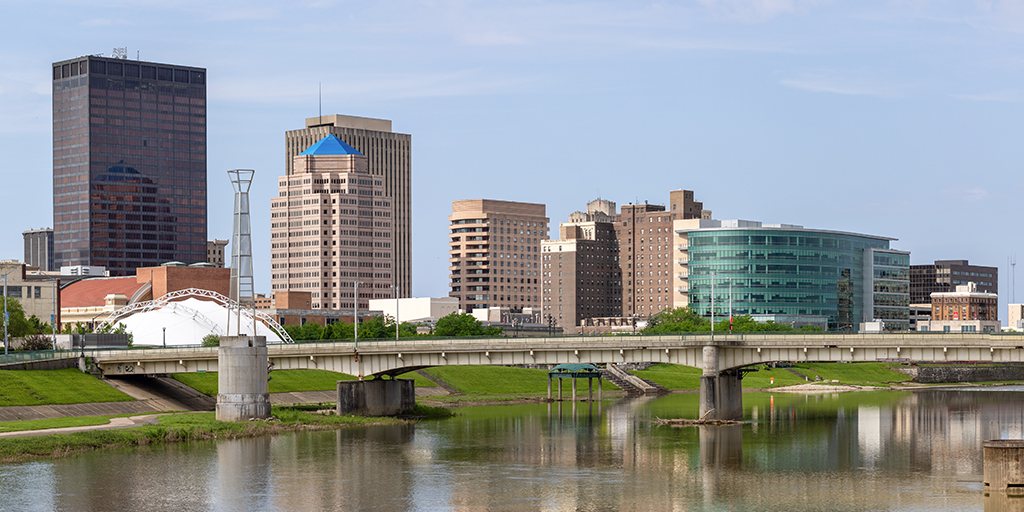
When Dayton and Montgomery County stepped up to stop rising drug overdose deaths, they harnessed the power of hundreds of people – one by one – on a focused response that reaches into virtually every aspect of community life. On this Premier Health Now On-Air podcast, hear the success strategies they are using to prevent deaths and move residents toward recovery. Leaders of the Community Overdose Action Team also share resources you can use to get involved and to help yourself, family and friends
Listen to Dayton Shows America How to Beat Opioids - Premier Health Now On Air, Episode 4 or read the transcript.
Dayton Shows America How to Beat Opioids - Premier Health Now On Air, Episode 4 - September 13, 2019
Leslie Laine: Welcome to Premier Health Now On-Air.
The Dayton community is showing America how to take on and turn back the rising tide of opioid overdose deaths. As recently as 2017, this region was experiencing one of the highest overdose fatality rates in the nation, and it led all other Ohio communities for overdose deaths. But within a year that death rate had dropped by about half, and through mid 2019 those gains appear to be holding.
Today, we'll hear what's behind the turnaround, and what we know now that others can learn from. Stay with us. I'm your moderator, Leslie Laine.
With me today are three professionals who have stepped up to the front lines the battle against opioids in the Miami Valley. All serve on the region's Community Overdose Action Team, and bring to the fight long experience in issues of addiction and substance abuse. They are Barb Marsh, assistant to the commissioner, Public Health Dayton & Montgomery County.
Welcome.
Barb Marsh: Thank you.
Leslie Laine: Also, Jodi Long, associate director at Montgomery County Alcohol, Drug Addiction and Mental Health Services. Thanks for joining us.
Jodi Long: Thank you for having me.
Leslie Laine: And Colleen Smith, director of Substance Abuse Services at Samaritan Behavioral Health. Welcome to you.
Colleen Smith: Thank you.
Leslie Laine: The Dayton region is by no means alone in battling opioid abuse. It is a national crisis of epidemic proportions with a complicated backstory.
How we got here in the briefest terms seems to trace back along three roots. In the late 90s, prescription opioids became increasingly popular to manage pain after surgery. Demand and dependency grew. Pill mills cropped up offering an easily accessible supply.
But as regulators work to tighten that supply line, people turned to more available illegal drugs. And then early in this decade, drug dealers began lacing illegal drugs with powerful synthetic opioids like fentanyl and carfentanil, and overdose fatalities began to soar.
How did Dayton become an epicenter of this drug crisis? What were you seeing?
Barb Marsh: Public Health Dayton in Montgomery County has been tracking unintentional drug overdose deaths since 2010, and we saw those numbers continue to rise from 127 drug overdose deaths, to 2017 when we hit a peak of 566 individuals who lost their lives in Montgomery County due to drug overdoses.
As we saw that increase, we saw a decrease in the number of prescribers or prescriptions that were being prescribed in the county with opioids. As we saw those numbers decrease, we also saw an increase of heroin, fentanyl and carfentanil hitting our streets.
We are also on major intersection of two major highways coming into our county. So we have a lot of supply into our county from illegal trafficking.
Colleen Smith: The way that kind of works, and when we're dealing with patients is, for example, we worked with a young man who was in his early 20s. When he was in high school, he was an outstanding basketball player. He hurt his knee really bad, had to have surgery because of that. As a result of the surgery, he was given pain medications and he really liked the way they made him feel. He ran out of pain medications because the prescription ran out.
Then he started rating his family's, especially as grandmother's cupboard, for additional medications. And then, when he found out that wasn't enough, he started looking ... his friends, started saying, "Well, there's some things on the street you can try." And he wound up getting involved with heroin.
His family got really concerned about what was going on and kept trying to get him into treatment, and he refused to go to treatment so they did some tough love and basically put him out of the house, which made him homeless.
He overdosed a couple of times and was rescued with Narcan by the police, and then finally he decided he'd had enough and he was willing to come into treatment. Over a period of about a year, and with a lot of support from his family and some really good friends who were not using drugs, he managed to get stabilized again, to quit using. His family let him come back in the house. He signed up to start going to college. Then he graduated from our program after about a year and a half.
That's one of the success stories, but that's kind of like what it looks like in a family with some of those things that happened.
Leslie Laine: He sounds like one of the luckier ones, if that's even a word to use, but what was the tipping point that really galvanize this community to say enough?
Jodi Long: I think there were a couple of things that were the tipping point.
It was no longer someone else's family or someone other's neighborhood that was impacted. Almost everybody in the community knew someone or knew someone else's family member who was impacted, and I think when that began to happen then, as systems, we all saw it.
Jail had seen increases numbers of people coming into the jail who were withdrawing, who were overdosing. Treatment providers had seen increasing numbers of people inside the treatment facilities. Hospital emergency room certainly saw increases.
There wasn't one family member, neighborhood community provider or system that wasn't impacted, and I think that became the tipping point. It wasn't someone else's problem. It was all of our problems.
Leslie Laine: A lot of people have tried a lot of different solutions that just didn't work. How did date and carve a different path?
Jodi Long: In early 2016 we saw the numbers continue to rise in terms of the number of people dying, and at that point the county commissioner's office came to Public Health and the Alcohol Drug and Mental Health Board and asked us to come together and create a unified response that incorporated any county system, any provider, any private nonprofit, any citizen who wanted to be part of a solution to come together.
And out of that was born the Community Overdose Action Team.
Barb Marsh: With the community overdose action team, we treated it as an emergency. It was a crisis that our community was facing and still is continuing to face, because we still have a lot of work to do even though we're seeing a decrease in the numbers.
With that, we set up under an emergency process. The structure that we're set up under is an incident command system structure. It's the same structure that emergency responders use to respond to any emergency or crisis that a community's facing.
Colleen Smith: One of the big differences from lots of other things that have been done in the community was the fact that it brought together everybody from police to law enforcement to corrections to church people to the neighbor down the street to social service agencies. A lot of players who traditionally may not have always worked so cooperatively together with the single focus of trying to look at what can we do to deal with the situation to prevent deaths and help people get in recovery.
And, like any new thing, there were some disagreements. Active discussion was encouraged. I mean, it's not just allowed, it was encouraged to get people to work together. Sharing of information was tremendous because we started finding out that there are lots of pockets of people who are trying to do the same thing. And so you didn't have to keep working on the same thing somebody else was working on. You could use your energies to do something different knowing that that one issue is being addressed, and that was one of the biggest strengths of the COAT.
Leslie Laine: What was the geographical reach for your, I'm going to use the name instead of COAT because it's hard to remember what COAT stands for, the community overdose action team?
Jodi Long: The reach for the community over those action team was Montgomery County, and still is Montgomery County, because every community inside Montgomery County has been impacted by the opiate epidemic.
Leslie Laine: Can you walk us through what you are doing?
Barb Marsh: What we're doing is we've created an emergency response, and underneath that emergency response we've created branches. Each one of those branches are working on different areas that are based on national and state strategies that we know that work to combat the epidemic.
We have a prevention branch, we have a response branch that's working on emergency response procedures. We have a treatment and recovery branch to increase access to treatment. We have a legal supply branch that's our law enforcement officers and our narcotics units that are working together and collaborating to decrease the supply on the streets.
Which ones am I missing?
Jodi Long: We have a criminal justice branch that looks at initiatives inside jails and our community-based correctional facilities, and how we people to treatment while they're incarcerated, how we provide them access and and get them trained for Narcan.
So when they're discharged from the jails and the prisons that they have Narcan to take back out into the community, hopefully not for themselves, but they're often returning into communities where they know someone else who actively using.
And so, the whole goal was how do we reduce overdose deaths? But then how do we equip everybody in the community with what they can do to respond if somebody they know is impacting?
Leslie Laine: And what can they do?
Jodi Long: There are lots of things-
Leslie Laine: Lots of ...
Jodi Long: And individual things individuals can do. You want to, Colleen, do you want to talk about Narcan?
Colleen Smith: Narcan is one of the things.
Narcan is a medication. It requires a prescription, but it can be freely given to anyone who's overdosing, and that's whether they're overdosing from opiates like heroin or whether it's your grandmother who took a pain pill, still had a lot of pain and forgot she took one and took another and had an overdose. We talk about it for everything.
Every Wednesday at noon we provide free Narcan training that anybody in the public can walk in to the Crisis Care office, which is 601 Edwin C Moses Boulevard, and just say that they want to get the Narcan training. It takes about an hour and they walk out with a kit.
At the same time, we also will go to community groups. For example, we provide training to dental assistants because one of the areas that people were getting pain medication a lot of times was from the dentist for having dental procedures. And so dental assistants wanted to be able to have Narcan training.
We provide training to medical professionals such as nurse practitioners and physician assistants. We go to a lot of church groups, especially in the communities where they've been really worried and they've maybe had family members of church participants who've passed away due to overdoses, and provide training there.
And it's all free. It is funded through the Human Services Levy because it was felt to be a major important factor in helping to prevent the overdoses.
And then we'll also give people information about local stats, about what's happening with the drugs in the community at this time and where they can go to get treatment.
Jodi Long: That's another option that people really need to consider is knowing what the treatment options are in the community. And we have a wonderful app known as GetHelpNow that any Android or Apple user can download through their Play Stores, and just type in "GetHelpNow" with no spaces and it'll come up.
And what that is is it's an active app that has the most up-to-date resources for treatment providers, for recovery houses, along with a variety of emergency services.
It's really a one-stop place where people can find a variety of treatment and supportive services.
It includes our recovery clubs, so if people are looking for a place to go that is a sober environment, but they may have movie night, they may have support groups. It just may be a safe place to be where they're around other recovering people.
The recovery clubs are listed in that app, as well.
Leslie Laine: I think I also that there is a peer mentoring kind of aspect to your program, as well.
Jodi Long: In the community we've been very, very fortunate. Goodwill Easterseals of Miami Valley provides the workforce development process for individuals who are in recovery to become certified peer recovery supporters.
And those individuals then can connect to someone who wants a peer. Maybe they're not ready for treatment, but they want to reach out and talk to somebody who's been where they've been.
And Goodwill Easterseals helps us connect individuals in early recovery with peers who will guide them and encourage them throughout their own recovery process.
Colleen Smith: For example, we hired two people at our agency that went to the training at Goodwill Easterseals-
Leslie Laine: At Samaritan Behavioral ...
Colleen Smith: At Samaritan Behavioral Health. And they've been fantastic.
If someone misses appointments, they will call them. They will go out to their house.
Let's say someone's been coming to treatment regularly, but suddenly their ride doesn't show up but they really want to be here. They can call the peer and they may go pick them up.
If someone is afraid to go to a 12 Step meeting because they've never been to one, they will either take them or meet them at the 12 Step meeting and kind of introduce them around.
The peer process has been a huge asset to the treatment.
And then, Barb, I think you wanted to add some.
Barb Marsh: Well, I was just going to add that we also have peer supporters that are part of our outreach teams in the community.
They work directly with law enforcement and fire-EMS departments across the county.
They provide outreach to individuals who have overdosed either through the hospitals or if they've overdosed and police have been called out to the scene, they provide outreach efforts to those individuals as well to help link them to services in the community.
And it might just be food, or shelter for the day, or it might be linking them to other resources including treatment.
The outreach teams include social workers or other addiction specialists that work directly with law enforcement, fire, EMS, and then we have peer supporters that are part of that process, as well.
Leslie Laine: And all of this activity is under the auspices of the Community Overdose Action Team.
Barb Marsh: Yes.
Leslie Laine: What, as you think about your response, are the key success factors, those elements that were absolutely essential to have or this was not going to work?
Jodi Long: The key success factors were the fact that we brought over 200 different organizations and individuals to the table who agreed upon a common agenda, and we agreed to share data and we agreed to work together.
And that despite any challenges we were having, that we would come back to the table and that together we would come up with solutions.
Inside those branches, the goal was not to duplicate work.
While there's eight branches, each of them have very specific task, and they create their own work and they guide their own work.
But it allows those 200 individual organizations to work together to all integrate and to braid together the response.
And that's really what has turned the tide here in Dayton, Ohio.
Colleen Smith: And one of the things that was really critical that the COAT did was the information sharing.
Every month or every other month, each of the people involved with their own branch would also receive a summary report of what all the other branches were doing.
That way if somebody was doing something, for example, prevention was doing something with church groups and you thought, "Oh, I'd like them to be involved in my church group," or, "I've had some church groups contact me."
You'd be able to tell your person, "Hey, contact this person over here with the prevention group because they have a program specifically for the churches."
And so you weren't trying to redo everything, but you were kept well informed of what all is happening in the community.
And the synergy of that was really exciting because there was so much happening that you would never know about if you didn't get those reports.
Barb Marsh: The other key, as well, was the data that we receive from each of the organizations because we each have a lot of data, but none of that information was being shared with each other.
As part of the structure, we created a data unit and that data unit creates reports every six months that then drive the decision making in the Community Overdose Action Team to what actions we need to ... or where are our gaps in services in the community and what actions do we need to take to continue to make a difference in services.
Leslie Laine: What challenges remain for you unaddressed?
Colleen Smith: Keeping people involved is one of the challenges.
The criticalness has slowed down a little bit.
There aren't as many people dying each day.
There's still a lot of people dying, but not near as many as there were dying.
The sense of urgency, plus the fact it's been going on for a couple of years.
The sense of urgency and the willingness to keep people engaged has created some of the challenge in some of the branches.
Jodi Long: From the Alcohol, Drug Addiction and Mental Health Services Board, one of our challenges is to continue to educate people about addiction as a whole.
This was not the first opiate crisis the United States has faced.
We faced one back in the 1960s.
We don't do very well learning from decade to decade.
And so to continue to educate the community about addiction as a whole, not just opiate addiction but addiction, becomes very important for us.
Alcohol is still the number one drug of abuse in the United States.
Millions of dollars are spent in healthcare caring for people with alcohol addiction.
Just the individuals don't die as quickly as a person using opiates.
And so sometimes we don't have that conversation because alcohol is very socially acceptable, but we have to continue to have that conversation.
That also creates an opportunity.
Most people don't have a way to address a family member or a friend or a neighbor that they're concerned about, whether it's a mental health crisis or a substance use crisis.
We often see things going on in an individual's life, but we don't have the kind of the tools on how to address somebody.
And so, we encourage anybody in community to attend and complete a mental health first aid course that's available here in Montgomery County at no cost to anyone that wants to participate.
You can go to the Montgomery County Alcohol, Drug Addiction and Mental Health Services website, which is www.mcadamhs.org, and you can click on our training calendar and find out where those local training options are available.
Or you can call the board here at (937) 443-0416 and we can connect you to a training as well.
And that training prepares people to have the conversation with a loved one or a friend to say, "I'm concerned about you. I see something changing, I see your use of substances," or, "I've noticed that you're missing work."
Those kinds of things, and that will help us address stigma related to addiction.
Leslie Laine: Is the response that you've created sustainable? What does the future look like?
Barb Marsh: Well, I think it's definitely sustainable.
I think that our goals and objectives may change over time.
As Jodie had mentioned, we need to start talking about addiction, not just about the drug of choice.
And, as we see drug trends change in the community, our responses will change in this community.
We need to ensure that we're responding to all populations of people within our community that are suffering from addiction.
Leslie Laine: What do you hope that other communities will take from your experience? If there's one thing, what is it?
Barb Marsh: Developing trusts and developing those relationships is key to the success, and ensure that you have a coordinated community response.
Colleen Smith: I guess one of the things that I think is real important, and it ties onto what Barb was saying, is the fact that working together and focusing on the mission needs to take priority over personal agendas.
And whether that's personal organizationally or personal personally, that sometimes having a focus on the big picture needs to be a priority.
And in a lot of communities it's very territorial, and different services are very territorial.
And it's important to have a champion who will keep saying, "The goal is what's more important than the individual."
Jodi Long: People recover and communities recover.
Both of those require hope.
The ability to see that you can make different choices.
You can change the tide of where you're walking and where you're headed.
But that really is just, it's very much vested in hope.
And so any community can replicate what we've done here in Dayton, Ohio, but at the beginning it becomes with hope that we can do it together.
Leslie Laine: While there still is so much work to do, Dayton's response to the opioid crisis is a story of commitment and creativity and, as you say, hope.
And it positions the region to tackle whatever comes with determination and resilience.
We thank Barb Marsh, assistant to the commissioner, Public Health Dayton & Montgomery County; Jodi Long, associate director at Montgomery County Alcohol, Drug Addiction and Mental Health Services; and Colleen Smith, director of Substance Abuse Services at Samaritan Behavioral Health, for joining us today.
If you want to know more, visit premierhealth.com/healthnow, or you can visit the Community Overdose Action Team on the Public Health website at phdmc.org/coat.
We'll be back. We hope you will. I'm Leslie Laine and thanks for joining us.
Watch for our next edition of Premier Health Now On-Air.
Source: Barbara Marsh, Public Health Dayton and Montgomery County; Jodi Long, Montgomery County Alcohol, Drug Addiction and Mental Health Services; Colleen Smith, Samaritan Behavioral Health