
Podcast: How to Break the Grip of Headache Pain
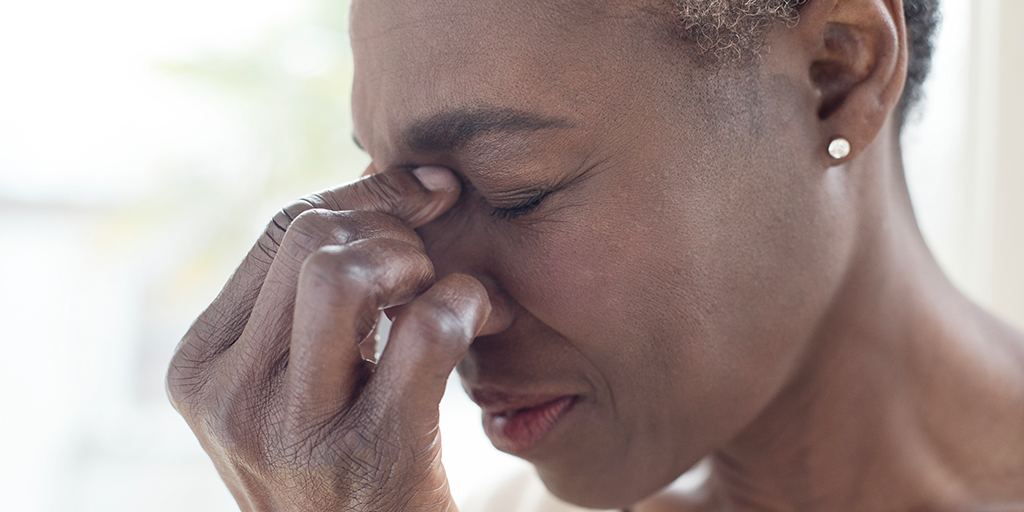
Not another headache! But taking note of your symptoms and how often and how long headaches trouble you can provide vital information to relieve or even prevent them. In this Premier Health Now On-Air podcast, we talk about understanding and managing that pain in your head. You'll learn what might trigger it, how your over-the-counter medication could make things worse, and an exciting new treatment to prevent migraines. Join headache specialist Dr. Richard Kim of the Clinical Neuroscience Institute for a healthy dose of pain relief.
Listen to How to Break the Grip of Headache Pain - Premier Health Now On Air, Episode 2 or read the transcript.
How to Break the Grip of Headache Pain - Premier Health Now On Air, Episode 2 - October 31, 2019
Leslie Laine: Welcome to Premier Health Now On-Air. If you've never had a headache, you are in a very small group of very lucky people. Headaches can be a minor nuisance or stop you in your tracks.
Today, we're talking about the headaches that most of us experience most often. Why does your head hurt so? Are you making your headache worse? Are they preventable? We're on a path to pain relief, so stay with us. I'm your moderator, Leslie Laine.
With me today is Dr. Richard Kim with the Clinical Neuroscience Institute in Centerville. While your specialty is internal medicine, you did your fellowship in headache medicine, so we're very glad to be able to tap into your expertise. Thanks for taking time to be with us today, Dr. Kim.
Dr. Kim: Thanks for having me today.
Leslie Laine: All headaches are not equal. Migraines and cluster headaches may be the more severe and debilitating, but tension headaches are the type that most of us will encounter. So what distinguishes these headaches from one another?
Dr. Kim: So there are many different types of headache. What really distinguishes one from another are characteristics of the pain that's experienced as well as any associated symptoms, and then the frequency and duration of the headaches as well.
Leslie Laine: So can you talk a little bit about those symptoms and signs?
Dr. Kim: The three most common headaches that most people have probably heard of are tension-type headache, migraine and cluster headache. So I'll just go through the varying characteristics of those. I'll start off with tension-type headaches, and this is the most common headache out there that most people will experience.
Tension-type headache is a headache that's usually bilateral on both sides of the head. It's mild to moderate, usually a steady or band-like as how patients describe it and not really associated with any nausea. If there is some, some people might get a little bit of a light or sound sensitivity, but not both.
For migraine, these are usually more severe. They're moderate to severe in intensity. Usually one-sided. Patients usually describe them as throbbing or pulsating or pounding in nature. These are severe enough where it makes people go lay down and rest. Usually in the dark and quiet. Many patients usually experience some nausea and/or vomiting or both light and sound sensitivity. Migraines usually lasts between four hours and three days.
Cluster headache, the third type of headache is very severe. People will say that cluster headache is the most painful thing you can experience and it was even nicknamed the suicide headache in the past. These headaches are excruciatingly severe, usually around the eye or in the eye, in the temple or forehead.
They last anywhere from 15 minutes to three hours and usually people get what we call a cranial autonomic symptom with the headache on the same side, and so these could be symptoms like a red eye or watery eye, a droopy eyelid, a runny nose or stuffy nose, maybe swelling of the eyelid, flushing or sweating of the face on the side of the headache. And these patients are usually pretty restless or agitated during the headache. So unlike migraine, they can't go lay down, they have to be up and about. They may be pacing around, rocking in a seated position, but they can't be still.
Leslie Laine: Is the mechanism that's causing the pain different in the three types of headaches? What's causing the pain?
Dr. Kim: Tension-type headache is subdivided into episodic tension-type headache and chronic tension-type headache. Episodic meaning less than 15 headache days per month. Chronic is 15 or more headache days per month.
In episodic tension-type headache, we think that there's more peripheral mechanisms involved, so the muscles in the head and around the head and the neck and shoulders. These muscles can have trigger points and activation of the pain fibers in these muscles as what we think causes a headache, an episodic tension-type headache.
In chronic tension type headache, we think there are more central processes going on in the brain, and this may be due to continued activation of the brain from these pain receptors in the peripheral muscles activating the central processes.
In migraine, we have this theory called the neurovascular theory of migraine where there's involvement of both nerves and blood vessels that activate pain areas in our brain than we experience the pain with the headache.
Cluster headache, somewhat similar to migraine. The trigeminal nerve is involved in different areas in the brain that are responsible for us experiencing pain are activated as well.
Leslie Laine: So is it possible if the tension headache that I think I'm having but is the worst one I've ever had could be one of those other types?
Dr. Kim: It's very possible. So as I mentioned, tension-type headache is usually mild to moderate. It's usually not severe and we always say if you have a patient that has recurrent, severe headaches, it's probably migraine. But if you do have recurrent severe headaches, it would be a good idea to get evaluated by your healthcare professional.
Leslie Laine: So for the more garden variety headaches, they seem to strike seemingly for no reason, but doctors know a lot about what triggers them and it seems that knowing our personal triggers could give us power to make changes and prevent them or at least lessen their grip.
So for example, if I'm in a job that's a really high pressure job, my boss is going to be a headache, the hours are going to be a headache, the deadlines are going to be a headache, but maybe I'm also creating a headache-inducing work environment. Ergonomics for example. Is that correct?
Dr. Kim: That's absolutely correct. There are many, many different triggers out there that have been identified. The hard part about studying triggers is the triggers aren't the same for each individual. Some triggers for me might not be for triggers for you and vice versa.
Work environment and stress are huge triggers for many people. As you mentioned, stress, having a mean boss, things like that can be a trigger, but also ergonomics. A lot of patients with headaches, especially tension-type headache have the head forward posture. Everything in our life is in front of us; computers, typing, our phones.
And so a lot of people have poor posture and that can definitely contribute, especially when you're thinking about episodic tension-type headache, having peripheral mechanisms, those muscles being involved. Poor posture can definitely aggravate that.
Leslie Laine: What about computer time? People seem to stare at the computer and won't even blink.
Dr. Kim: So computer screens emit a lot of blue light and there have been studies showing, especially in migraine, that blue light is the color of light that could trigger headaches or make a headache worse. And many people get light sensitivity with their headaches. They can make that worse too.
So possibly, that prolonged exposure to blue light may be a trigger. Also, if you're working on the computer a lot, you're typing, over time you might get tired, your posture starts worsening and that could activate nerves in the neck and possibly trigger headache as well.
Leslie Laine: I believe there's also some options on phones for a blue light filter.
Dr. Kim: There are. So I do recommend using the blue light filter in patients that tell me they are pretty sensitive to computer screens or TV screens, things like that.
Leslie Laine: Is it also true that we can eat our way to a headache? And I'm not talking about overindulgence, but that certain foods may be triggers for people?
Dr. Kim: There are certain foods that can be triggers for certain people. Some may include certain types of alcohol, red wine, but I've had patients that tell me that a specific type of alcohol is a trigger for them. So one type of beer but not another, one type of red wine but not another.
Processed foods, foods containing nitrites and nitrates can be triggers for some people. Artificial sweeteners like aspartame is a huge trigger for many people. One few that many people think is often a trigger for their headaches is chocolate, but it turns out, especially if we look at migraine, there's different stages of a migraine attack and one stage is called the prodrome.
This is a stage that occurs before a patient even experiences any head pain.
And during this time, patients get different symptoms like mood changes, irritability. They might be tired, yawn a lot. Another symptom during the prodrome phase is food cravings.
And so we think that maybe chocolate isn't really a trigger, but it's just a craving that people get and they eat the chocolate during the prodrome phase and they just correlate that with the headache coming on later on.
But they're probably going to get the headache regardless if they ate that piece of chocolate or not.
Leslie Laine: How much we drink in a day makes a difference too, right? Now, I'm talking hydration, not alcohol.
Dr. Kim: That's right. Being dehydrated is a huge trigger for a lot of people too. I ask all my patients in their intake form to identify potential triggers and dehydration is often one that's circled.
Leslie Laine: Do you have guidelines for people who are into heavy sports in terms of maintaining hydration?
Dr. Kim: This isn't like a guideline, but one thing I would say is drink enough water so your weight is the same by the end of your physical activity, but it's hard to gauge how much while you're in that sport.
Leslie Laine: Here in Southern Ohio, the joke is that if you don't have sinus problems now, you live here long enough, you will. What's behind the sinus headache? And is that preventable or manageable or just suffer through it?
Dr. Kim: So one common misconception is that sinus headaches are really common, and I think this plays more when we're talking about migraine. A lot of people with migraine can get sinus symptoms and so they mistakenly identify their headaches as sinus headaches because they have sinus symptoms or the headache might be located on top of one of their sinuses like in the forehead or in the cheeks.
There is a large study that looked at several hundred patients that have either been self-diagnosed with sinus headache or their primary care doctor diagnosed them with sinus headache. And they found that 80% of them actually had migraine or probable migraine. Migraine is often misdiagnosed as sinus headache because of the overlap in symptoms.
Leslie Laine: How would I know the difference?
Dr. Kim: Again, looking at the diagnostic criteria for migraine. So migraine, as I mentioned, is a usually one-sided headache, usually pulsating or throbbing, moderate to severe in intensity and causing avoidance of routine physical activity, and usually associated with either nausea and/or vomiting, or both light and sound sensitivity.
As far as sinus issues causing headaches, chronic sinus disease has not really been shown to be a cause for headaches. Acute sinus infections can cause headaches however.
And so that's usually the time I would attribute any sinus disease to a headache is if they had an acute sinus infection.
Leslie Laine: Lifestyles that include, as we talked, a lot of stress and lack of sleep can bring on headaches as can physical and emotional health issues. So with all of this opportunity, certainly the over-the-counter drug industry offers us shelves of pain relievers. What's your advice for navigating all of those choices?
Dr. Kim: There are many, many options over-the-counter that are available for treating headaches. I do want to give one word of caution however. A lot of these over-the-counter treatments, for example, Excedrin have different names for treating different headaches, but they're all the same ingredients. Excedrin Migraine, Excedrin Tension Headache. They're all the same.
So some people think they are different. They might be taking Excedrin Migraine one day, Excedrin Tension-type Headache another day, but it's all the same. I would say stick with one medication and if that doesn't work, then we can maybe try another one. If that doesn't work, I would go seek help from your healthcare professional.
Leslie Laine: Is there something you see people do where they're really going wrong with self-medicating for headaches that you wish they wouldn't do?
Dr. Kim: It's taking acute medications too often. And there's this thing called medication overuse headache, which can happen if you use certain acute medications too frequently.
So if we're talking about over-the-counter medications, we're usually talking if you use them more than 10 days per month, you can get medication overuse headache.
And this can make your headaches worse, more frequent, more severe, and make other headache medications not work as well as they should.
And I see it very frequently when patients come and see me for the first time. They're taking over-the-counter medications 20, 25, sometimes 30 out of 30 days in a month.
And if you ask them, they realize that as they were taking more and more medications, their headaches were getting worse.
And so that's something we need to be very careful about over-treating and over-medicating which could have a negative effect and make your headaches worse.
Leslie Laine: Have you found any alternative methods that have been helpful for people, whether that's mineral intake or acupressure or essential oils? Any of those helpful?
Dr. Kim: Sure. There are several nutraceuticals and natural supplements and alternative treatments that have been shown to be effective in headache.
For instance, for migraine prevention, some natural supplements have been shown to be effective in preventing migraine are magnesium and riboflavin or vitamin B2.
Acupuncture has been shown to be effective in reducing overall headache frequency as well. And that's something that's low risk, and so if patients want to try that, I encourage them to do so.
I do have some patients that respond to and some swear by essential oils such as lavender. And so if they want to try essential oils, I'm okay with that as well.
There are behavioral therapies that have been shown to be effective in headache treatment such as cognitive behavioral therapy, biofeedback, relaxation training and mindfulness. And these are things that I encourage every single one of my headache patients to pursue.
Leslie Laine: Where does one find information about those treatments?
Dr. Kim: Going online and doing a quick Google search on behavioral therapies for headache is one way to find some information. The American Migraine Foundation is a good resource for patients with headache and they have good information there as well.
Leslie Laine: So what excites you about research into headaches these days?
Dr. Kim: This is a really exciting time in the headache world because we're finally having more research done and we finally have some more treatments available, especially for migraine.
In May of last year in 2018, the first CGRP or calcitonin gene-related peptide monoclonal antibody was approved by the FDA for the preventative treatment of migraine.
And this is a class of medications that are really the first designer medications we have for migraine. They were developed specifically for migraine.
Every other preventative treatment we have for migraine prior to last year were developed for some other condition initially and we just happen to find out they helped in migraine prevention as well.
So it's really exciting. It's really nice to have another option in migraine prevention.
Leslie Laine: That was a very long name for that designer drug. What does it do?
Dr. Kim: CGRP is a protein that's found throughout our body, but in migraine, it has a very active role in our brain.
CGRP is involved in several different mechanisms in what causes migraine. It's involved in dilating blood vessels around our brain.
It's involved in inflammation and it's involved in transmitting pain signals in our brain.
And so these monoclonal antibodies block the activity of the CGRP protein thereby preventing the headaches.
Leslie Laine: Is that an injectable kind of medication then or a pill?
Dr. Kim: They are injectable. There are three CGRP monoclonal antibodies available currently and they are all injections.
Two of them come in an autoinjector, kind of like an EpiPen. And then one is a prefilled syringe.
Leslie Laine: So this is something with a migraine patient you're going to be discussing as appropriate to their treatment?
Dr. Kim: Yes. So any patient that isn't an appropriate candidate for having a migraine preventative treatment, this is something that I usually discuss with them.
Leslie Laine: You've mentioned that there are times when it's time to get professional help. Where does a person start and how can they best help their doctor help them?
Dr. Kim: A good time to seek professional help is if you have headaches that cause any disability, whether that might be only one day and you're severely disabled, you can't do anything all day, you're missing work.
Or whether that's four days a month with some disability or you're having more headaches than you just want to.
That would be a good time to go seek professional help.
What can help during the office visit is coming with a good log or diary of your headaches, so making sure you note how long your headaches last usually, any associated symptoms, any nausea, light or sound sensitivity.
Another useful piece of information is what do you do during a bad headache, if you didn't have any other obligations.
So if you didn't have to go to work, didn't have to take the kids to school, what would you do?
If you're all alone and you had a severe headache, would you go lay down, turn the lights off, turn the TV off?
Or would you have to go pace around, go outside?
All this is good information to share with your healthcare professional, as well as any medications you've tried and how often you've tried them, how long you've tried them, and how many times a day you've tried them.
Leslie Laine: So headaches are a pain in the neck and above, but understanding and managing your own headache triggers can go a long way toward keeping your head clear and pain-free.
So we want to thank you, Dr. Kim, for such practical insights.
Our guest today is Dr. Richard Kim with the Clinical Neuroscience Institute.
If you want to know more, visit premierhealth.com/healthnow.
We'll be back. We hope you will.
I'm Leslie Laine and thanks for joining us. Watch for our next edition of Premier Health Now On-Air.
Source: Richard Kim MD, Clinical Neuroscience Institute